Introduction
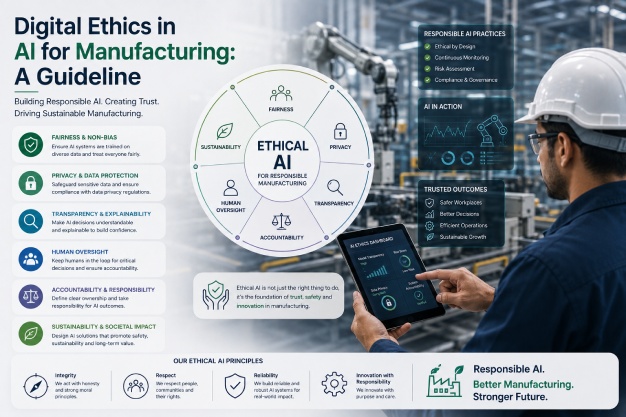
In an era where artificial intelligence (AI) is transforming industries, manufacturing enterprises are increasingly adopting AI-driven web solutions. These technologies offer significant potential for efficiency and innovation. However, with great power comes the responsibility to ensure ethical implementation. This article explores the importance of digital ethics in AI for manufacturing and provides guidelines for transparent development.
Table of Contents
- The Importance of Digital Ethics in AI
- Guidelines for Transparent AI Development
- Challenges and Solutions
- FAQ
- Conclusion
The Importance of Digital Ethics in AI
As AI becomes integral to manufacturing processes, ethical considerations are paramount. Ensuring fairness, accountability, and transparency can prevent misuse and build trust among stakeholders. Ethical AI practices help safeguard data privacy and avoid biases that can lead to unfair treatment of individuals. For manufacturing enterprises, adopting digital ethics can enhance reputation and compliance with regulations.
Guidelines for Transparent AI Development
Implementing AI ethically requires a structured approach. Here are some key guidelines:
- Define Clear Objectives: Begin by outlining the purpose and goals of the AI system. Ensure alignment with organizational values and ethics.
- Ensure Data Integrity: Use accurate and unbiased data sources. Regularly audit data sets to maintain quality and relevance.
- Implement Accountability Measures: Assign clear responsibilities for AI outcomes. Establish protocols for addressing errors or unethical behavior.
- Prioritize Transparency: Develop AI systems that are explainable. Stakeholders should easily understand how decisions are made.
- Engage Stakeholders: Involve diverse teams in the AI development process to incorporate varied perspectives and expertise.
Challenges and Solutions
While implementing digital ethics in AI, manufacturing enterprises may face several challenges:
- Resource Constraints: Limited budgets and expertise can hinder ethical AI development. Solution: Partner with experienced firms like Gravity Effects for strategic consulting.
- Complex Regulations: Keeping up with evolving regulations is challenging. Solution: Regularly update compliance strategies and engage with legal experts.
- Resistance to Change: Employees may resist new AI systems. Solution: Provide comprehensive training and demonstrate the benefits of ethical AI.
FAQ
What is digital ethics in AI?
Digital ethics in AI involves ensuring that AI technologies are developed and used responsibly, focusing on fairness, transparency, and accountability.
Why is transparency crucial in AI development?
Transparency allows stakeholders to understand AI decisions, fostering trust and enabling accountability for outcomes.
How can Gravity Effects help in ethical AI implementation?
Gravity Effects offers expert guidance in AI development, ensuring solutions are ethical, transparent, and aligned with business goals.
Conclusion
Digital ethics in AI is not just a regulatory requirement but a business imperative for manufacturing enterprises. By following ethical guidelines, companies can enhance operational efficiency while building trust and reputation. Partnering with experienced firms like Gravity Effects ensures that your AI-driven web solutions are developed with integrity and transparency.
Contact us today to explore how Gravity Effects can assist with your AI and digital transformation needs.
Discover more from GravityEffects
Subscribe to get the latest posts sent to your email.