Introduction
Multi-generational website design is essential for small businesses aiming to engage a diverse audience. A well-designed site that appeals to Baby Boomers through to Gen Z can significantly improve user engagement and conversion rates. Understanding and addressing the unique preferences of each generation is crucial to crafting an inclusive and effective online experience.
Understanding Generational Preferences
Each generation has distinct preferences that impact their digital behavior. Recognizing these differences is the first step in creating a website that effectively caters to all age groups.
Baby Boomers
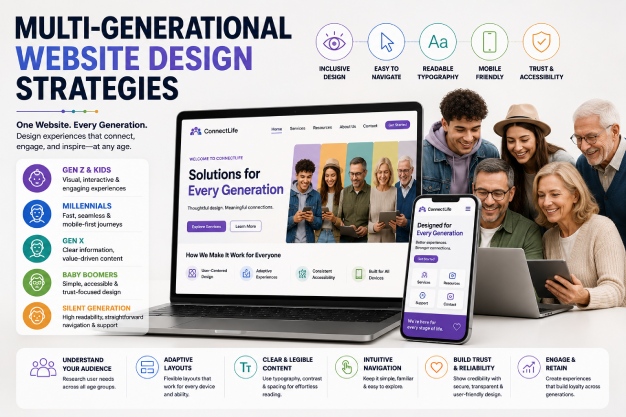
Born between 1946 and 1964, Baby Boomers value clarity and simplicity. They prefer straightforward navigation and larger text sizes. Visual elements should be minimal yet informative. Businesses should focus on creating a seamless and intuitive user journey for this group.
Generation X
Generation X, born between 1965 and 1980, appreciates functionality and efficiency. Comfortable with technology, they value quick access to information. A well-structured layout with clear calls to action works best for them. It’s essential to provide detailed product information and easy ways to contact support.
Millennials
Millennials, born between 1981 and 1996, are digital natives. They favor interactive elements and responsive designs. Engaging content and social media integration are key to capturing their attention. Offering user-generated content, such as reviews and testimonials, can enhance their trust.
Generation Z
Gen Z, born from 1997 onwards, thrives on innovation and speed. They expect seamless experiences and are drawn to visually dynamic content. Mobile optimization and multimedia elements are crucial for capturing their interest. They also appreciate transparency and authenticity in brand messaging.
Integrating Design Elements for All Generations
With a clear understanding of generational preferences, the next step is integrating specific design elements that resonate across age groups.
Responsive Design
A responsive design ensures the website functions well on all devices, from desktops to smartphones. This is particularly important for Gen Z and Millennials, who frequently access sites via mobile devices. Consider using flexible grid layouts and scalable images to enhance mobile usability.
User-Friendly Navigation
Clear and intuitive navigation is vital. Use straightforward menus and ensure critical information is easily accessible. This approach benefits Baby Boomers and Gen X, who appreciate simplicity. Implementing a search bar and breadcrumb trails can further enhance navigation.
Visual Hierarchy
Establishing a visual hierarchy helps users find information quickly. Use headings, subheadings, and bullet points to break down content, appealing to all generations by enhancing readability. Color contrast and white space should be optimized to improve focus and comprehension.
Inclusive Content
Content should be diverse and inclusive, reflecting the values and interests of different age groups. Incorporate varied media types such as videos, podcasts, and blogs to engage a broader audience. Use language that resonates with each generation, and ensure that visuals reflect diversity.
Accessibility Features
Implement accessibility features like alt text, keyboard navigation, and screen reader compatibility. This ensures all users, including those with disabilities, can access the site effectively. Make sure to comply with standards such as WCAG for comprehensive accessibility.
Technology to Bridge the Generational Gap
Utilizing technology effectively can help bridge the generational gap, ensuring a cohesive experience for all users.
AI and Personalization
Artificial Intelligence can offer personalized experiences by analyzing user behavior. Tailored content recommendations can enhance user satisfaction across generations. For instance, AI-driven chatbots can provide instant support, catering to the needs of Gen X and Millennials.
Interactive Features
Interactive features such as quizzes, polls, and chatbots can engage users of all ages. These elements create a dynamic environment that encourages interaction and retention. Incorporating gamification elements can further increase user engagement, particularly among Gen Z.
Social Media Integration
Integrating social media allows users to share content easily, broadening your reach. Millennials and Gen Z, in particular, value social connectivity. Ensure that social media links are prominent and encourage user interaction through social media campaigns.
Case Study: Successful Multi-Generational Website Design
Consider the example of a local retail store that revamped its website to appeal to a broader audience. By implementing responsive design, clear navigation, and interactive elements, they saw a 20% increase in user engagement across all age groups.
- Challenge: Initial website lacked mobile optimization and engaging content.
- Solution: Added interactive features, improved navigation, and optimized for mobile devices.
- Outcome: Enhanced user experience and increased customer retention.
Why is multi-generational website design important?
It’s essential to cater to diverse age groups to maximize reach and engagement, which can lead to increased conversions and customer loyalty.
How can I ensure my website is accessible to all generations?
Focus on responsive design, clear navigation, and inclusive content. Use technologies like AI for personalization and ensure accessibility features are in place.
What role does mobile optimization play in multi-generational design?
Mobile optimization is crucial as younger generations predominantly use mobile devices. It ensures a seamless experience across all platforms.
Can interactive features improve user engagement?
Yes, interactive features like quizzes and chatbots can significantly enhance user interaction, making the site more engaging for all age groups.
What are some best practices for multi-generational website design?
Adopt a responsive design, incorporate AI for personalization, ensure accessibility, and engage users with interactive features. Tailor content to reflect diversity and inclusivity.
Conclusion and Call to Action
Designing a website for multi-generational appeal is not only feasible but also beneficial for small businesses. By understanding and addressing the preferences of different generations, you can create an inclusive and engaging online presence. If you’re ready to modernize your website and bridge the generational gap, contact Gravity Effects to explore how our expert team can support your digital transformation.
Discover more from GravityEffects
Subscribe to get the latest posts sent to your email.