Understanding Web Hosting: The Backbone of Your Online Presence
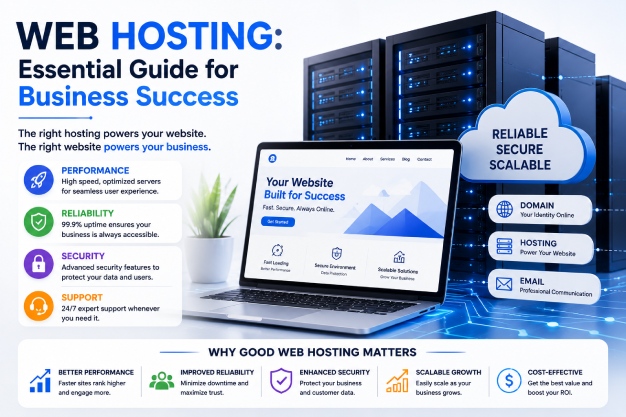
Web hosting is a crucial component for any business aiming to establish a strong online presence. It serves as the foundation of your website, ensuring it’s accessible to users around the globe. Without reliable web hosting, even the most beautifully designed website can’t perform effectively. In this guide, we’ll explore the importance of web hosting, different types of hosting, and how to choose the best option for your business.
Table of Contents
- Importance of Web Hosting
- Types of Web Hosting
- Choosing the Right Hosting for Your Business
- Key Features to Look For
- Common Web Hosting Mistakes
- FAQs on Web Hosting
- Conclusion and Next Steps
Importance of Web Hosting
Web hosting plays a vital role in the performance and reliability of your website. It determines how fast your website loads, its uptime, and overall accessibility. For businesses, these factors directly impact user experience and can affect your search engine rankings.
Moreover, a professional web hosting service offers security features to protect your site from cyber threats. It provides the necessary infrastructure to ensure your site functions smoothly, supporting business growth by accommodating increased traffic and data requirements.
Types of Web Hosting
There are several types of web hosting available, each suited to different needs and budgets:
Shared Hosting
Shared hosting is an affordable option where multiple websites share a single server’s resources. It’s suitable for small businesses or startups with limited traffic. However, sharing resources can lead to slower performance during peak times.
VPS Hosting
Virtual Private Server (VPS) hosting provides a balance between cost and performance. It partitions a single server into multiple virtual servers, giving you more control and resources compared to shared hosting. This option is ideal for growing businesses.
Dedicated Hosting
With dedicated hosting, your website has an entire server to itself. This option offers the highest level of performance, security, and control, making it suitable for large businesses with high traffic volumes.
Cloud Hosting
Cloud hosting uses a network of servers to host your website, ensuring flexibility and scalability. It’s perfect for businesses that experience fluctuating traffic, as it allows resources to be adjusted on demand.
Managed WordPress Hosting
This type of hosting is specifically optimized for WordPress sites. It includes features like automatic updates and backups, making it ideal for businesses using WordPress as their CMS.
Choosing the Right Hosting for Your Business
Selecting the right web hosting service is crucial for your business’s success. Here are some factors to consider:
Performance and Reliability
Look for a hosting provider that guarantees high uptime (99.9% or above) and fast loading speeds. These factors ensure that your site is always available and performs well, contributing to a positive user experience.
Scalability
Your hosting solution should be able to grow with your business. Choose a provider that offers easy upgrades to higher plans or additional resources as your website traffic increases.
Security Features
Ensure that your provider offers strong security measures, including SSL certificates, firewall protection, and regular backups. This will protect your site from potential threats and data loss.
Customer Support
Responsive customer support is essential. Look for providers that offer 24/7 support through various channels, ensuring any issues are quickly resolved.
Cost
While it’s important to stay within budget, consider the value provided by the hosting service. Cheaper options may lack essential features, potentially costing more in the long run due to downtime or security issues.
Key Features to Look For
When evaluating web hosting providers, consider the following features:
- Bandwidth and Storage: Ensure your plan offers sufficient bandwidth and storage to accommodate your site’s needs.
- Control Panel: A user-friendly control panel simplifies website management tasks.
- Backup Services: Regular backups protect your data and allow for easy recovery in case of issues.
- Email Hosting: Many providers include email hosting with their plans, offering professional email addresses linked to your domain.
- Content Delivery Network (CDN): A CDN can improve loading times for global users by caching your site’s content across multiple locations.
Common Web Hosting Mistakes
To ensure success, avoid these common web hosting pitfalls:
Choosing Based on Price Alone
Opting for the cheapest hosting option can lead to poor performance or limited features. Balance cost with the quality of service provided.
Ignoring Security Considerations
Security should be a top priority. Ensure your hosting provider offers robust security measures to protect your site and data.
Overlooking Scalability
Failing to consider future growth can lead to issues down the line. Choose a scalable solution that can adapt to your business’s changing needs.
Not Reading the Terms of Service
Always read the terms of service to understand the provider’s policies on resource usage, refunds, and account termination.
FAQs on Web Hosting
What is web hosting and why do I need it?
Web hosting is a service that allows your website to be accessible on the internet. It’s essential because it provides the infrastructure and space needed to store your website’s files, ensuring users can access it online.
Can I switch hosting providers later?
Yes, you can switch providers. However, ensure you back up your site and choose a compatible new host to minimize downtime and data loss during the transfer.
What is the difference between shared and dedicated hosting?
Shared hosting means multiple websites share the same server resources, while dedicated hosting provides a single server for one website, offering better performance and control.
How important is customer support in web hosting?
Customer support is crucial, especially if you encounter technical issues. A provider with 24/7 support can help resolve problems quickly, minimizing potential downtime.
Conclusion and Next Steps
Web hosting is an essential component of your business’s online strategy. By understanding the different types of hosting and evaluating your business’s needs, you can select the right solution to support your growth and ensure a seamless user experience. Consider factors such as performance, scalability, security, and support to make an informed decision.
Ready to optimize your website’s performance with reliable web hosting? Contact Gravity Effects today to discuss how we can support your business’s digital needs with our comprehensive hosting solutions.
Related Reading
- Optimizing Web Development for Monsoon Season
- Developing Eco-Friendly Manufacturing Websites
- Navigating Post-Quantum Security for Web Solutions
Browse more articles in Web Hosting & Performance.